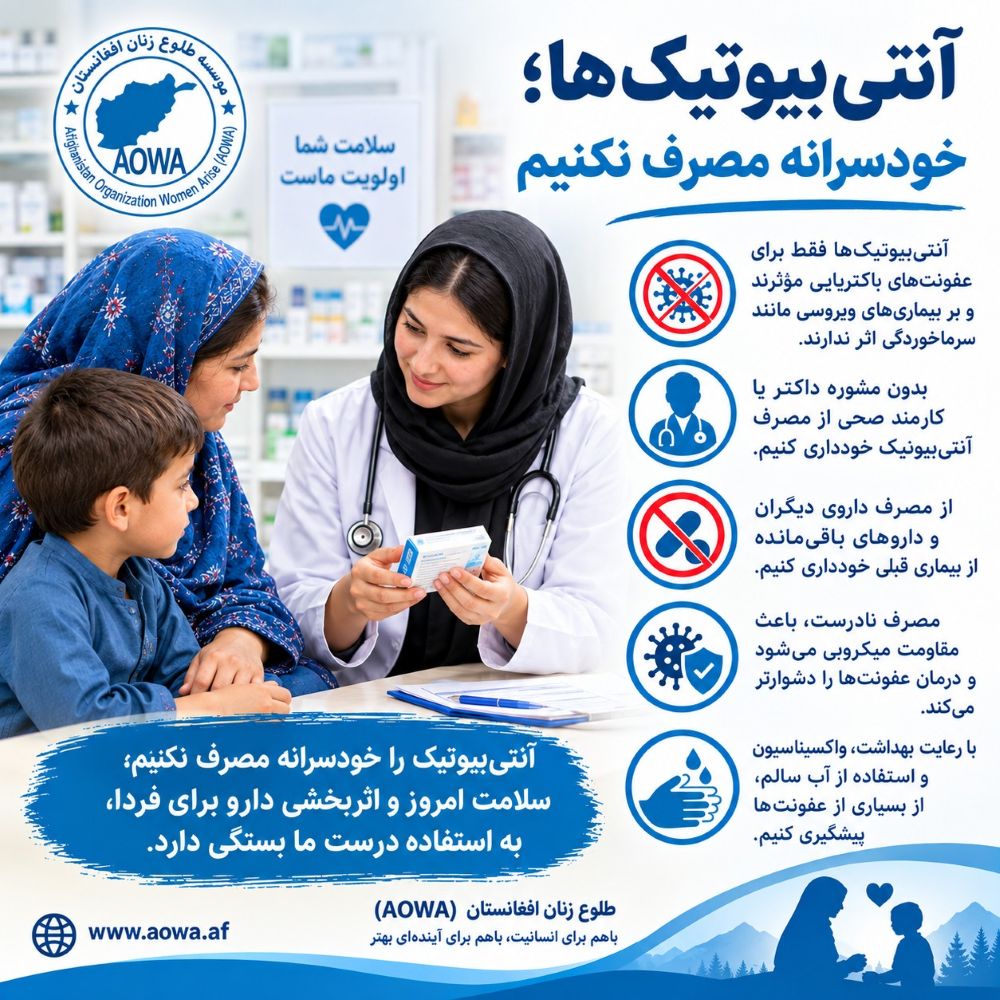
Antibiotics are medicines used to treat certain bacterial infections and can play an important role in treating many illnesses. However, unnecessary or inappropriate use of these medicines can become a serious health problem for individuals and communities. The World Health Organization identifies the overuse and misuse of antibiotics as important contributors to antimicrobial resistance.
One important point is that antibiotics do not work against viruses. Colds and many viral respiratory infections cannot be treated with antibiotics. Therefore, not every fever, cough, or sore throat requires an antibiotic, and the cause of an illness should be assessed by a qualified health worker.
Some people reuse leftover medicines from a previous illness or take antibiotics that were prescribed for someone else. This can be risky because the type of illness, health condition, and treatment needs may be different from one person to another. For this reason, antibiotics should not be used without advice from a doctor or qualified health professional.
Inappropriate use of antibiotics can cause bacteria to develop resistance to these medicines. When this happens, medicines that were previously effective against an infection may no longer work well, making treatment more difficult. Antimicrobial resistance can contribute to the spread of infections, more severe illness, and the need for more complex treatments.
When an antibiotic is prescribed, it is important to take it according to the instructions of the health professional and follow the guidance regarding the dose, timing, and duration of treatment. Antibiotics prescribed for one person should not be shared with others, and leftover antibiotics from a previous illness should not be used to treat a new illness.
Preventing infections can also reduce the need for antibiotics. Regular handwashing, food hygiene, safe water, good sanitation practices, and receiving recommended vaccinations are among the measures that can help prevent many infections.
Awareness among families is particularly important. Parents can teach children not to take medicines without permission and without appropriate advice from a health professional. Families should also understand that a medicine being stronger or acting more quickly does not mean that it is appropriate for every illness.
Addressing antimicrobial resistance is not only the responsibility of doctors and health workers. Families, patients, pharmacies, health facilities, and other parts of society all have a role to play in using antibiotics responsibly. Appropriate use helps preserve the effectiveness of these medicines for situations in which they are genuinely needed.
Afghanistan Organization Women Arise (AOWA) considers health awareness and education for families and communities among its important areas of work and emphasizes the responsible use of medicines and timely access to appropriate health services. Increasing awareness about antibiotics can contribute to better decisions, reduced unnecessary use, and stronger community health.
Do not use antibiotics without medical advice; medicines we use responsibly today should remain effective for the treatment needs of tomorrow.