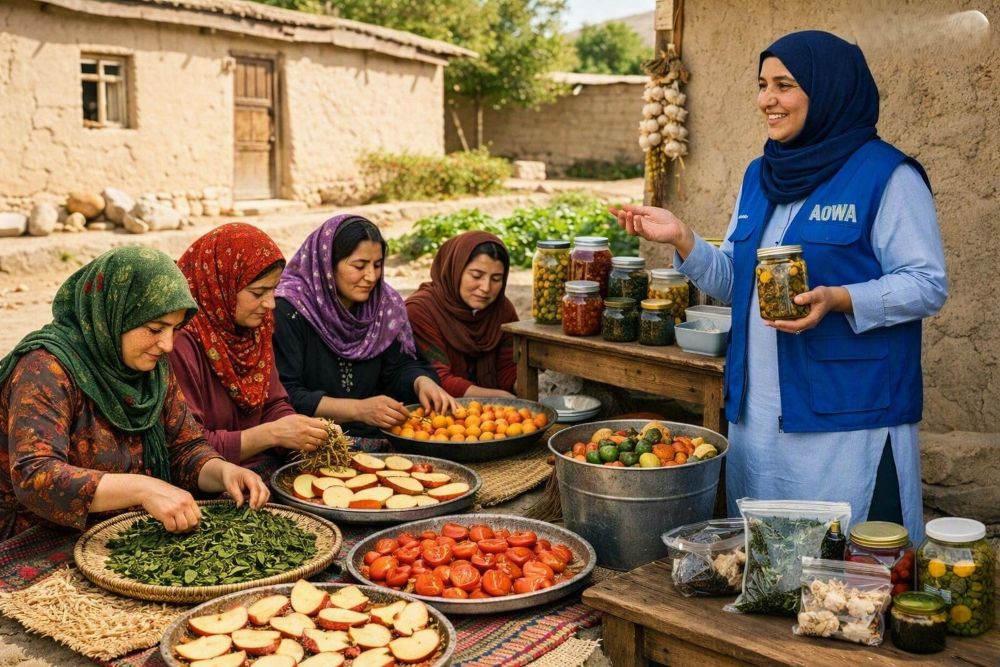
Ensuring year-round access to nutritious food remains a cornerstone of household food security and economic resilience across rural communities. To minimize post-harvest losses and empower rural women in managing family food supplies, Afghanistan Organization Women Arise (AOWA) prioritizes practical training in hygienic food preservation and processing. Utilizing low-cost, traditional preservation methods retains essential nutrients while significantly reducing household living costs during the colder months.
Hygienically drying fruits and vegetables serves as one of the simplest and most effective techniques for long-term food preservation. Thorough washing, sorting, and drying produce in clean, shaded, well-ventilated areas away from direct sunlight and dust preserves natural flavor, color, and key vitamins. Furthermore, preparing traditional preserves, jams, and pickles using strict hygiene protocols allows households to safely store surplus harvests for seasons when fresh yield is scarce.
Proper packaging and storage are critical for preventing food spoilage and degradation. Storing dried herbs and preserved foods in airtight, dry containers kept away from light and humidity protects them from pests and moisture damage. This straightforward practice ensures that families maintain access to nutrient-rich food throughout the winter without relying on expensive market alternatives.
Promoting home processing skills fosters self-reliance, improves family health, and creates opportunities for micro-income generation among rural women. Afghanistan Organization Women Arise (AOWA) remains dedicated to supporting rural households through hands-on workshops, helping families maximize their agricultural yields and secure long-term nutritional stability.