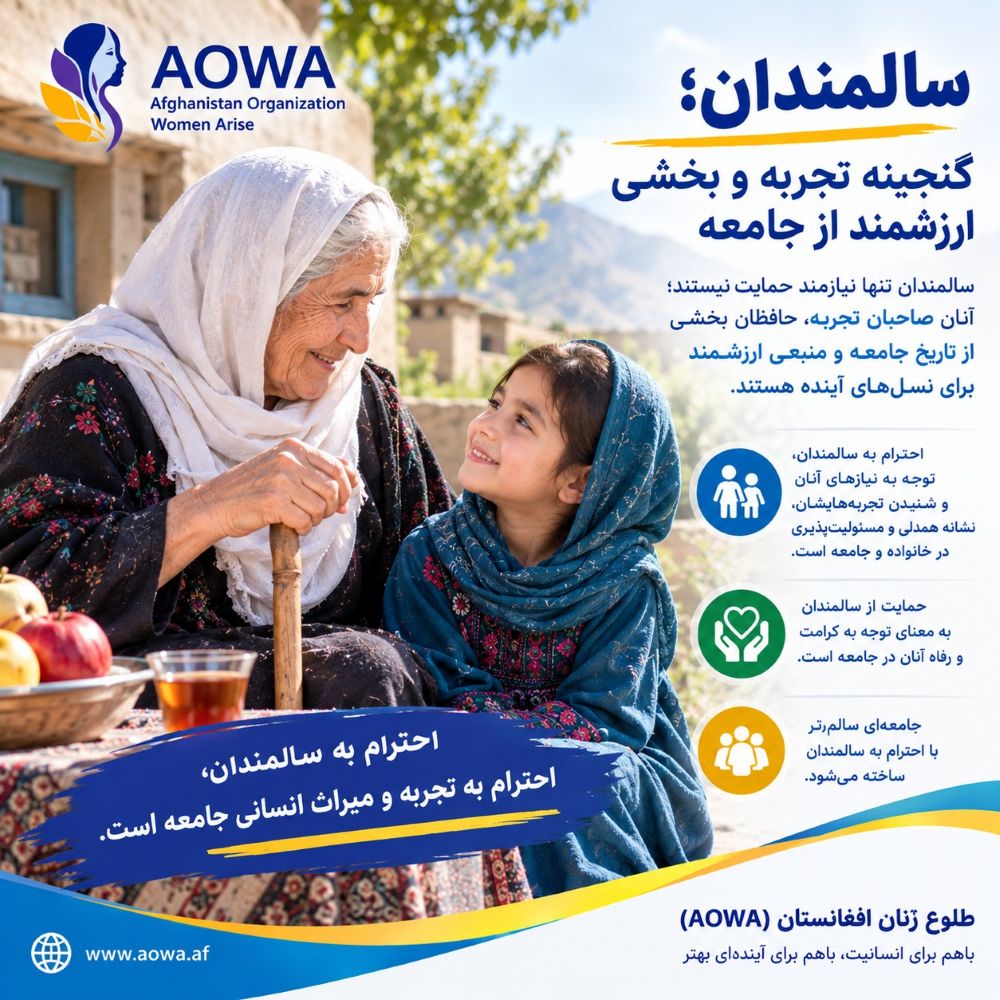
Older people are a valuable part of every family and community. Throughout their lives, they have gained experiences, knowledge, and memories that can be meaningful and valuable for younger generations.
Respecting older people is not only a positive social practice; it also holds an important place in Afghan culture and Islamic teachings. Paying attention to their needs, treating them with respect, and appreciating their contributions and experiences can reflect responsibility and compassion within families and communities.
Older people may face challenges such as health problems, reduced physical abilities, loneliness, or a greater need for family support. Paying attention to these needs and creating a safe and respectful environment can help protect their dignity and well-being.
Families have an important role in supporting older people. Talking with them, listening to their experiences, paying attention to their daily needs, and providing opportunities for appropriate participation in family life can strengthen their sense of belonging and value. Supporting older people also provides an opportunity to pass experience and positive values from one generation to another.
Communities can also play an important role in creating supportive environments for older people. Attention to their access to health and social services, preventing disrespect and discrimination, and providing opportunities for participation according to their abilities can contribute to building a more supportive society.
Afghanistan Organization Women Arise (AOWA) emphasizes human dignity, social support, and attention to the real needs of individuals and families. Supporting older people can be part of a collective effort to build a society where people are respected and supported at every stage of life.
Older people are not only recipients of support; they are holders of experience, guardians of part of a community’s history, and a valuable source of knowledge for future generations.
Respecting older people means respecting the experience and human heritage of society.