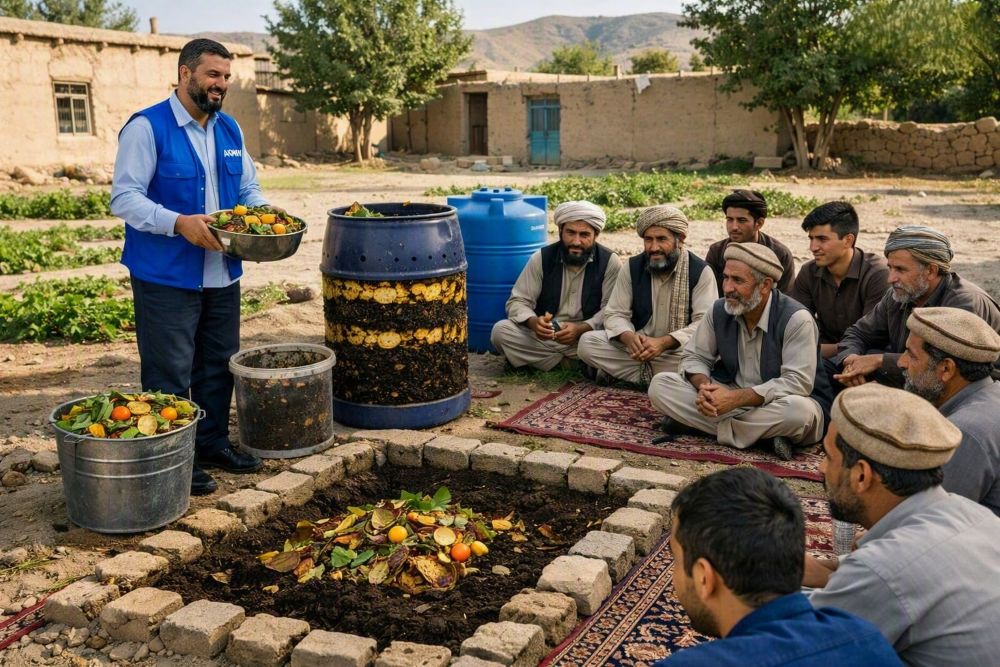
With growing populations and shifting consumption patterns in rural areas, managing household waste has emerged as a significant environmental and public health challenge. Aligning with sustainable development goals and community health priorities, Afghanistan Organization Women Arise (AOWA) has initiated comprehensive training programs focused on proper waste management and source separation within local communities. Irresponsible waste accumulation not only contaminates soil and groundwater resources but also accelerates the spread of infectious diseases; conversely, efficient waste management can transform potential environmental hazards into practical economic opportunities.
A substantial portion of household waste produced in rural settings consists of organic, biodegradable materials, including kitchen scraps, fruit peels, and agricultural residue. Converting these organic wastes into natural fertilizer represents one of the most cost-effective and practical methods for enriching the soil quality of household gardens and small farms. Utilizing organic fertilizer minimizes reliance on costly and harmful chemical fertilizers while improving soil moisture retention, enhancing crop resilience, and strengthening household food security.
The process of making organic fertilizer is straightforward and relies entirely on basic resources readily available in rural courtyards or farm plots. Digging a simple pit in a household yard or utilizing perforated barrels, layering moist and dry organic waste, and periodically turning the mixture to facilitate aeration are all that is required to yield nutrient-rich organic fertilizer. Beyond maintaining a clean living environment, these accessible techniques empower households to cultivate organic produce independently and economically.
Educating and involving diverse community members throughout this process is crucial for establishing a lasting culture of environmental stewardship. Afghanistan Organization Women Arise (AOWA) remains dedicated to supporting rural communities toward cleaner surroundings, sustainable agriculture, and greater economic self-reliance through practical workshops on waste management and organic fertilizer production.