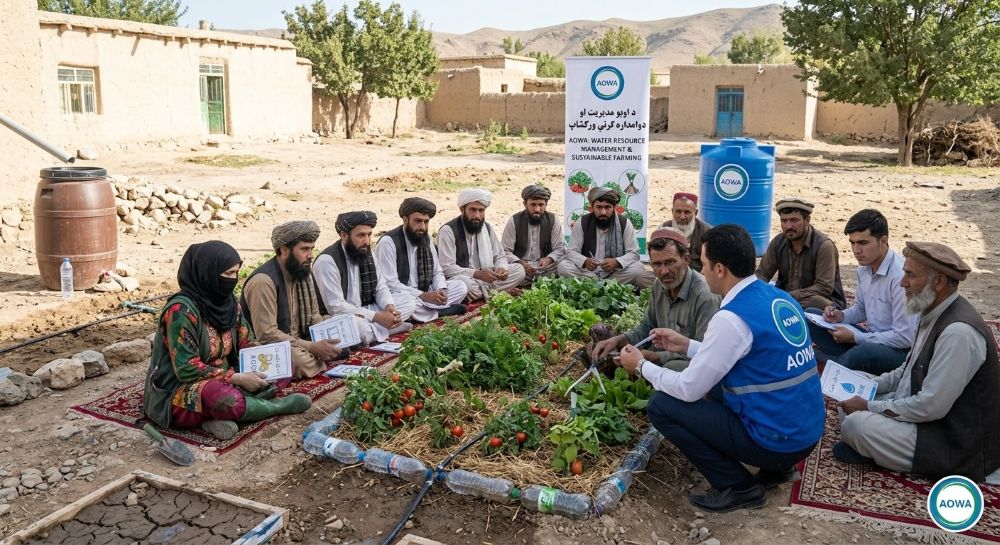
In light of climate change, reduced rainfall, and depleting groundwater levels in recent years, efficient water resource management has become a critical necessity for rural communities. Recognizing this urgency, Afghanistan Organization Women Arise (AOWA) has prioritized training on water-saving techniques and smart irrigation methods for household gardens and small-scale farms.
1. The Importance of Small-Scale Water Management
In rural areas, household livelihoods and food security heavily depend on agricultural output and kitchen gardens. Traditional flood irrigation methods often lead to severe water loss, soil degradation, and reduced crop yields. Educating communities on low-cost, innovative techniques is essential to preserving this vital resource.
2. Practical Methods for Water Conservation
- Low-Cost Drip Irrigation: Utilizing recycled bottles and containers to deliver water directly to plant roots, reducing evaporation loss by over 50%.
- Soil Mulching: Applying organic materials such as dry leaves or straw over the soil surface to retain moisture, prevent rapid evaporation, and control weed growth.
- Smart Watering Schedules: Irrigating during cooler hours (early morning or evening) to minimize water loss caused by direct heat and sunlight.
- Rainwater Harvesting: Directing rooftop rainwater into small barrels or storage tanks for use during dry spells.
3. Role in Family Economy and Food Security
Efficient water management ensures continuous cultivation of fresh vegetables even during dry seasons. Beyond providing nutritious food for the household, this allows rural women and local farmers to sell surplus produce in local markets, generating a stable income stream.
Conclusion and Commitment
Protecting water resources means safeguarding the future and livelihoods of rural communities. Afghanistan Organization Women Arise (AOWA) remains dedicated to supporting local self-reliance through practical training on climate adaptation and sustainable agricultural practices.