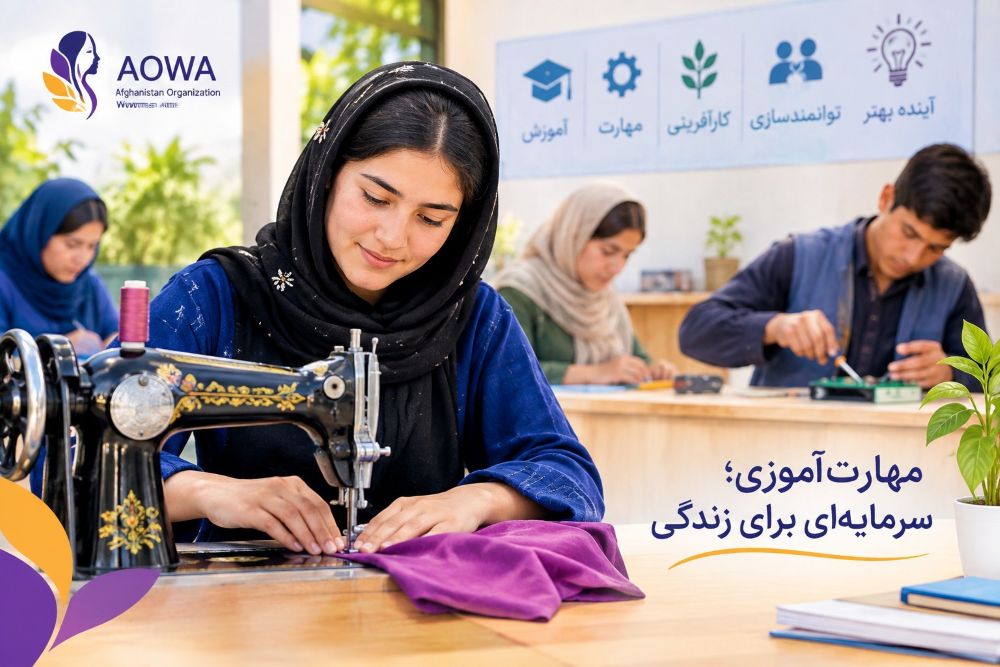
Knowledge and education are important foundations for human development; however, having practical skills is equally important for making effective use of what we learn. Skills development helps people apply their knowledge in daily life, the workplace, and social activities.
Skills are not limited to professional and vocational abilities. Life skills, effective communication, problem-solving, resource management, teamwork, and the responsible use of technology are also important abilities that can help people better respond to the needs and changes of life.
One of the important benefits of skills development is that it turns knowledge into practical ability. For example, a person who receives training in agriculture can apply practical skills in the field. Another person may acquire a vocational skill that creates opportunities for employment, income generation, or starting a small economic activity.
For this reason, skills development can create additional opportunities for individual and social growth alongside formal education. Education becomes more effective when people are able to apply what they have learned in real-life situations and use their knowledge to address challenges and create new opportunities.
Women and young people can also strengthen their capacities through access to appropriate learning and skills-development opportunities and play a more active role in their families and communities. Acquiring practical skills can contribute to greater self-confidence and create opportunities for increased participation in economic and social activities.
Skills development is most effective when it responds to the real needs of communities. Understanding local capacities, economic conditions, available resources, and the needs of families can help ensure that training programmes are more practical and appropriate to local circumstances.
Learning is not limited to a particular stage of life. People can acquire new skills and develop their abilities throughout different stages of their lives. Promoting a culture of learning and skills development within families and communities can contribute to strengthening human capacity and creating new opportunities for growth.
Afghanistan Organization Women Arise (AOWA) believes that developing human capacity is one of the foundations for building stronger communities. Creating opportunities for education and skills development, responding to people’s real needs, and making use of local capacities can help individuals use their abilities more effectively and contribute more actively to the future of their families and communities.Skills become truly valuable when they turn into ability, opportunity, and positive change.