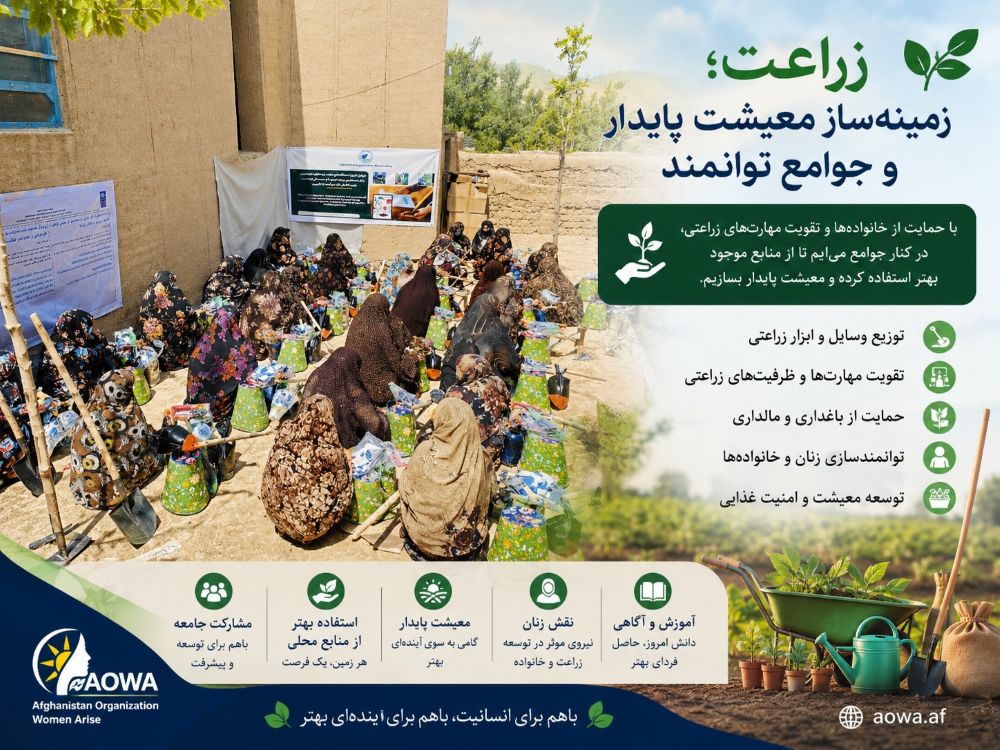
Agriculture is an important part of the lives and livelihoods of many families in Afghanistan. For many families living in rural areas, land, horticulture, livestock, and other agricultural activities are not only sources of income, but also an essential part of daily life and meeting household needs.
Afghanistan Organization Women Arise (AOWA) believes that strengthening agricultural capacities and supporting families to make better use of available resources and opportunities can contribute to improved livelihoods, stronger household economies, and more empowered communities.
Agriculture: More Than an Economic Activity
Agriculture is more than the production of crops. It is directly connected to livelihoods, nutrition, household economies, employment, and sustainable communities.
When families have access to appropriate knowledge and skills, they can make more effective use of available resources and take practical steps toward improving their economic situation.
In many rural communities, local knowledge and the experiences passed down through generations are also valuable assets. Combining this knowledge and experience with appropriate new approaches and skills can create better opportunities to make effective use of existing capacities.
AOWA’s Approach to Agriculture
Within its activities and available capacities, AOWA seeks to support the strengthening of families’ and communities’ capacities and promote better use of local resources and opportunities.
Key areas of attention include:
Strengthening agricultural skills and capacities
Improving the effective use of available resources and opportunities
Supporting horticulture and local agricultural production
Supporting livestock-related capacities
Strengthening the role of women and families in livelihood activities
🤝 Promoting community participation in agriculture-related activities
The Role of Women and Families
Women play an important role in many rural households through agricultural activities, horticulture, livestock, and household management. Recognizing their knowledge and skills and providing opportunities to strengthen their capacities can contribute to stronger household economies and better use of available resources.
Empowering families does not mean creating permanent dependence on external assistance. Rather, the goal is to strengthen their knowledge, skills, and existing capacities so that they can identify appropriate ways to improve their lives and livelihoods by making better use of the resources available to them.
Agriculture and the Future of Communities
Climate change, drought, limited water resources, and economic challenges are among the factors that can affect the lives of families whose livelihoods depend on agriculture. Therefore, increasing awareness, using resources efficiently, strengthening skills, and promoting appropriate agricultural practices are becoming increasingly important.
A community that can use its natural resources and local capacities responsibly and effectively has greater opportunities to build sustainable livelihoods and reduce household vulnerability.
AOWA believes that agricultural development is not limited to increasing production; strengthening family capacities, making better use of resources, creating livelihood opportunities, and increasing community resilience are also important parts of this process.
Every piece of land is an opportunity; every skill is a capacity; and every empowered family is a step toward a more sustainable community.
AOWA | Together for Humanity, Together for a Better Future