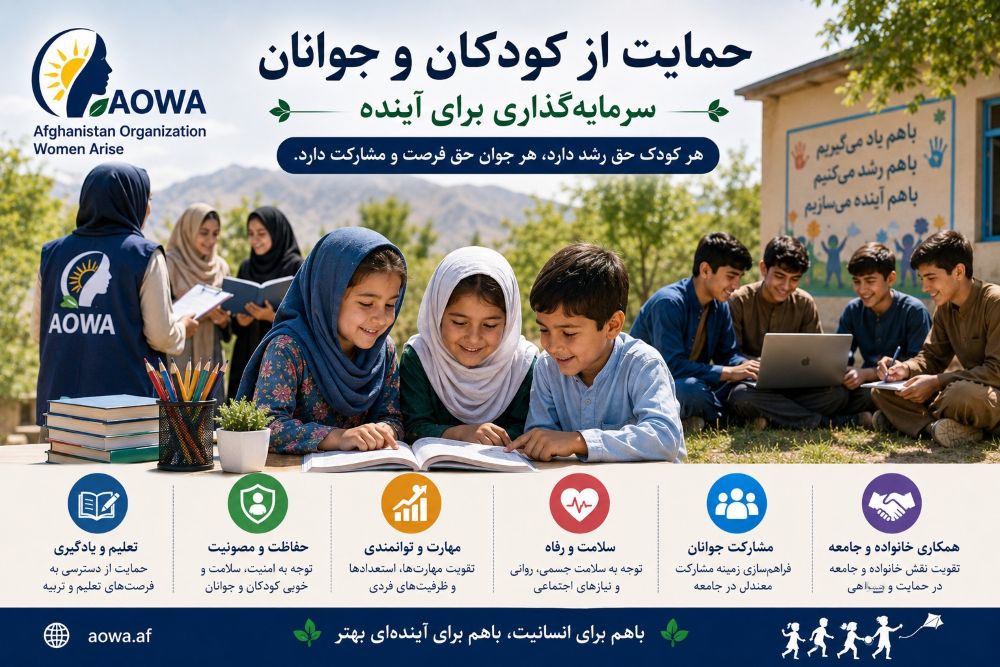
Children and young people are among the most important assets of any society. Creating an environment where they can learn, grow, stay healthy, participate, and develop their talents not only contributes to their well-being today, but also helps build a more informed, healthy, and capable society for the future.
Afghanistan Organization Women Arise (AOWA) believes that every child and young person has unique potential and talents. With appropriate opportunities, they can develop their abilities and play a positive role within their families and communities. For this reason, paying attention to the needs of children and young people and creating opportunities for their growth and participation are important elements of AOWA’s approach.
What Does Supporting Children and Young People Mean to AOWA?
Supporting children and young people is not limited to providing services. It also means creating safe and supportive environments, addressing educational and social needs, strengthening skills, listening to their perspectives, and providing opportunities for meaningful participation and development.
Within its activities and available capacities, AOWA seeks to focus on:
📚 Supporting access to education and learning opportunities
🛡️ Promoting the protection, safety, and well-being of children and young people
🌱 Strengthening their skills, talents, and capacities
❤️ Paying attention to the health and social needs of children and families
👥 Creating opportunities for meaningful youth participation in communities
🤝 Strengthening the role of families and communities in supporting children and young people
Why Is Supporting Children and Young People Important?
Childhood and youth are among the most important stages in the development of a person’s character, abilities, and future. The opportunities available during these stages can have a significant impact on both individual lives and the future of communities.
A child who has access to education and a supportive environment has greater opportunities to develop their abilities. A young person who has knowledge, skills, and opportunities to participate can play a more confident and effective role in social and economic life.
Creating safe and supportive environments for children and young people is also essential. Families, communities, educational institutions, and social organizations all have an important role to play in creating such environments.
AOWA believes that effective support for children and young people is possible when families, communities, and relevant institutions work together to create better opportunities for them.
Children and Young People Are More Than Recipients of Support
An important principle of supporting children and young people is recognizing that they should not be viewed only as recipients of services. Children, and particularly young people, can have valuable perspectives and capacities on issues that affect their lives.
Listening to young people’s views, respecting their perspectives, and creating appropriate opportunities for participation can strengthen their sense of responsibility, confidence, and connection to their communities.
AOWA seeks to support approaches that take into account the cultural and social context of Afghanistan and place dignity, respect, protection, education, participation, and opportunities for development at the center.
The future of every society is closely connected to the conditions created for its children and young people today. Investing in their education, health, skills, and capacities is, in reality, an investment in the future of families and communities.
AOWA believes that supporting children and young people is not the responsibility of one organization alone; it is a shared responsibility. Through cooperation among families, communities, and different institutions, meaningful and sustainable results can be achieved.
Every child deserves an opportunity to grow, and every young person deserves an opportunity to learn, participate, and shape their future.
Children and young people today are the builders of tomorrow’s society.