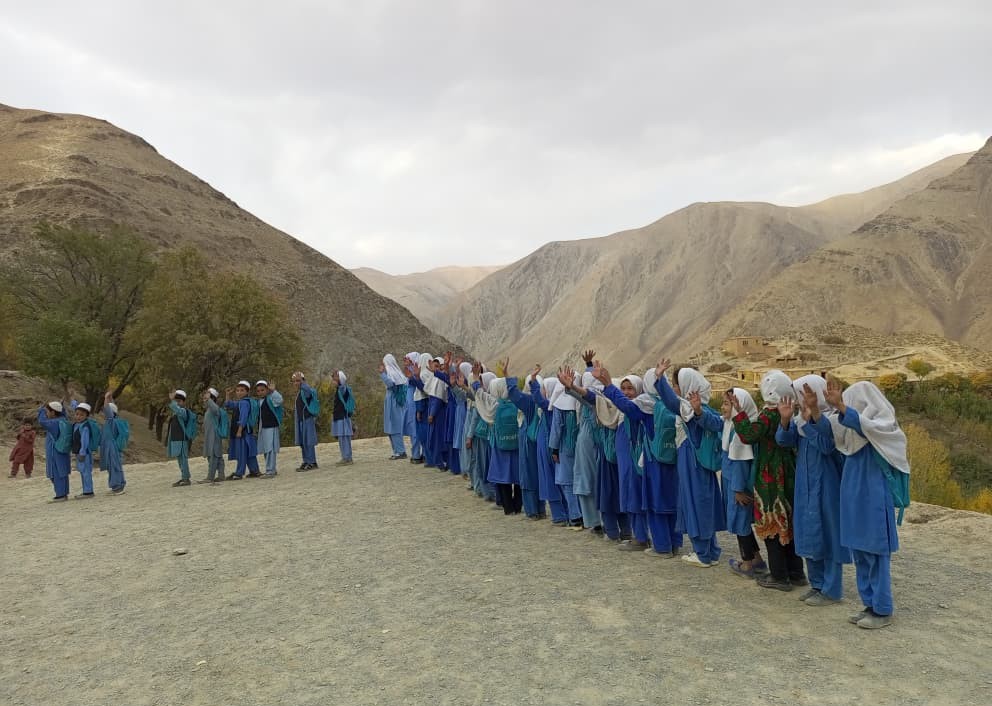
Over the past years, the Community-Based Education (CBE) program has been one of the most effective and impactful educational initiatives in rural, remote, and underserved areas of Afghanistan. In contexts where access to formal public schools was severely limited due to geographic isolation, poverty, insecurity, and socio-cultural barriers, this program enabled hundreds of thousands of children—particularly girls and other vulnerable groups—to access their fundamental right to education. CBE not only provided basic literacy and numeracy skills, but also contributed significantly to building children’s self-confidence, strengthening life skills, encouraging social participation, and fostering hope for a better future among children, families, and entire communities.
With deep concern, we note that the implementation of this vital program was suspended by UNICEF in December 2025. This decision has had immediate and far-reaching consequences for the lives and futures of thousands of children across the country. The abrupt suspension of the CBE program, without the establishment of a practical and sustainable alternative, has led to the closure of thousands of community-based education centers in rural districts and villages. As a result, many children have once again been deprived of their right to education—children for whom CBE represented the only available pathway to learning.
The absence of this program has already begun to generate serious and alarming consequences. Rising illiteracy, the widening educational gap between urban and rural areas, increased educational inequality, and the loss of opportunities for personal and social development are among the most direct impacts of the suspension of CBE. Children who are excluded from education are far more vulnerable to child labor, early and forced marriage, violence, exploitation, and psychological distress. These risks do not only affect children themselves, but also place a heavy burden on families, communities, and the long-term social and economic development of the country. Education is the foundation of human development, and depriving an entire generation of this right significantly undermines Afghanistan’s future capacity and resilience.
The Afghanistan Organization Women Arise (AOWA) expresses its profound concern regarding this situation and calls upon national and international stakeholders—particularly UNICEF and donor institutions—to reconsider the decision to suspend the CBE program. Should continuation of the program not be possible, there is an urgent need to design and implement an effective, inclusive, and operational alternative that ensures uninterrupted access to education for children in remote and underserved areas. Decisions that directly affect the educational trajectory and future of generations must be grounded in the real needs of communities, informed by consultation with local civil society actors, and guided by a clear assessment of humanitarian, social, and developmental consequences.
We firmly believe that education is not a privilege, but a fundamental and non-negotiable right of every child. Continued neglect of educational access for children in marginalized areas—particularly under the current circumstances in Afghanistan—constitutes not only an educational failure, but a broader humanitarian and development crisis. AOWA urges all responsible authorities, international organizations, civil society actors, and child rights advocates to take immediate, coordinated, and responsible action to prevent thousands of Afghan children from being left behind and to ensure that their futures are not sacrificed to short-term decisions made without viable alternatives. Education saves lives, and no child should ever be deprived of it.